
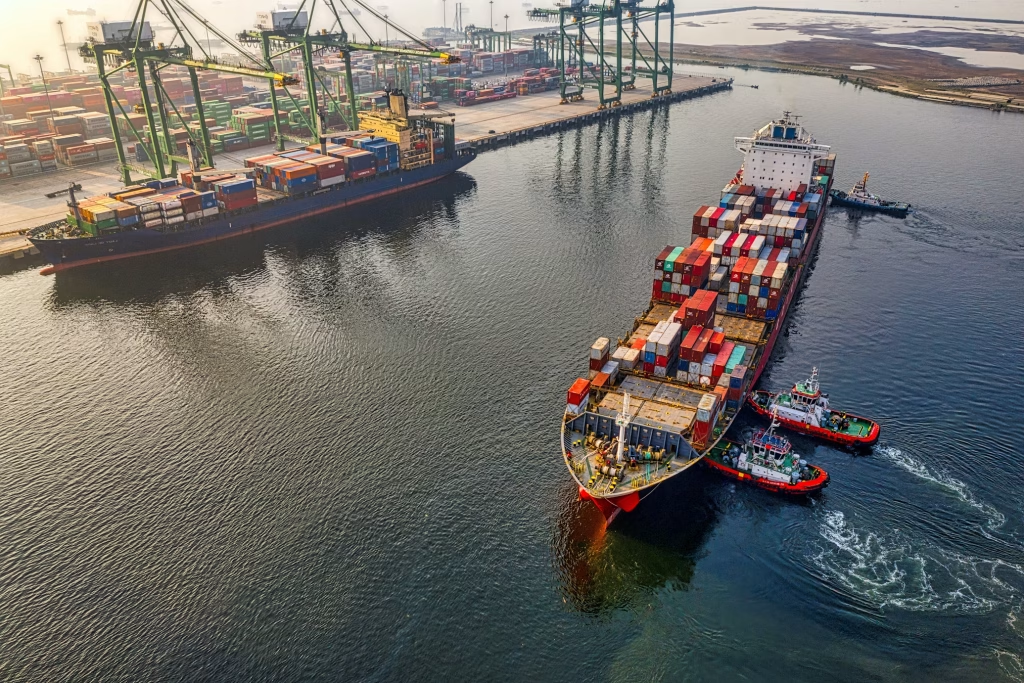
Hi friends, have you ever wondered how a product can travel from a warehouse to your doorstep without you thinking about everything happening behind the scenes? Modern logistics plays an important role in making that possible. From local deliveries to international freight, businesses rely on organized transportation and distribution systems to move goods efficiently. Companies such as RR Express are part of this wider logistics landscape, supporting businesses with delivery, distribution, and freight solutions across different markets.
Understanding the Role of Logistics
Logistics is basically the process of planning, managing, and coordinating the movement of goods. It can involve transportation, storage, distribution, and communication between different parties. For a business, good logistics management helhttps://www.rrexpress.com.sg/https://www.rrexpress.com.sg/ps ensure that products move from suppliers to warehouses and eventually reach customers in an organized way. Even a simple online order can involve several logistics steps before it arrives at its destination.
Why Supply Chain Management Matters
Logistics is closely connected to supply chain management. A supply chain includes suppliers, manufacturers, warehouses, distributors, retailers, and customers. When these parts work together smoothly, businesses can manage their inventory and transportation more effectively. A well-organized supply chain can also help companies respond to changes in customer demand, supplier availability, and delivery requirements.
The Growing Importance of E-Commerce
The rapid growth of e-commerce has changed how businesses think about delivery. Customers are now accustomed to ordering products online and receiving them at their homes or offices. This creates a need for reliable systems that can handle orders, prepare packages, organize transportation, and track shipments. For online businesses, logistics is no longer something that happens in the background. It has become an important part of everyday operations.
Local Delivery for Everyday Business
Local delivery remains an important part of logistics, especially for retailers, restaurants, wholesalers, and online sellers. Businesses may need to send documents, products, equipment, or other goods between different locations within the same city or country. Courier and domestic delivery services can help businesses manage these shipments without having to organize every transportation process themselves.
Moving Goods Across Borders
International shipping involves more considerations than domestic delivery. Goods may travel through several transportation networks before reaching their final destination. Air freight, sea freight, and land transportation can all play a role depending on the type of shipment, destination, timing, and business requirements. International logistics also requires attention to customs procedures, documentation, packaging, and coordination between different parties.
The Role of Warehousing
Warehousing is another important part of the logistics process. Products often need to be stored before they are delivered to customers or transferred to another location. An organized warehouse can make it easier to locate products, prepare orders, manage inventory, and coordinate outgoing shipments. For businesses handling many products, proper warehouse management can make daily operations more structured and easier to monitor.
Choosing the Right Transportation Method
Different shipments may require different transportation methods. Air transportation can be useful for certain time-sensitive or international shipments, while sea freight is commonly used for larger volumes of goods. Land transportation is also important for domestic distribution and connections between warehouses, ports, airports, and business locations. Selecting a transportation method usually depends on factors such as distance, shipment size, destination, schedule, and cost.
Technology in Modern Logistics
Technology has become increasingly useful in logistics operations. Digital systems can help businesses organize shipment information, communicate with partners, manage inventory, and monitor transportation activities. Tracking technology can also provide useful visibility into shipment progress. As businesses become more connected, digital tools are expected to remain an important part of logistics and supply chain management.
Logistics for Businesses of Different Sizes
Logistics needs can vary greatly from one business to another. A small online store may only handle a few shipments each day, while a larger retailer can manage thousands of products across multiple locations. Established logistics providers may work with businesses of different sizes and coordinate with retailers, third-party logistics companies, air cargo providers, and sea freight companies to support various transportation requirements.
Building a More Organized Delivery Process
A well-planned logistics process can make business operations easier to coordinate. It starts with understanding what needs to be moved, where it needs to go, and when it needs to arrive. Businesses can then consider suitable storage, transportation, documentation, and distribution arrangements. Regularly reviewing these processes can also help companies identify areas that may need adjustment as their operations grow.
Looking Ahead at Logistics
As international trade, e-commerce, and business networks continue to develop, logistics will remain an important part of commercial activity. Businesses need practical ways to move goods between suppliers, warehouses, stores, and customers. Providers such as RR Express, which was founded in 2013 and serves customers across Singapore, Australia, the UK, and Southeast Asia, operate within this broader logistics environment by providing delivery, freight, and distribution solutions for local and international shipments.
Understanding the Future of Delivery
Modern logistics is much more than simply transporting a package from one place to another. It connects suppliers, businesses, transportation networks, warehouses, and customers through a coordinated process. Whether a company handles local deliveries or international freight, understanding its logistics needs can help create a more organized approach to daily operations. For businesses looking to understand the wider courier service in Singapore landscape, learning how delivery, freight, and distribution work together can provide useful context. sampai jumpa kembali di artikel menarik lainnya.



More Stories
Clean Core sebagai Strategi Keamanan SAP: Kurangi Attack Surface, Percepat Patch
Ide Usaha Fashion yang Menarik serta Berpeluang Cuan
Apa Itu Trading dan Bagaimana Cara Kerjanya untuk Pemula